
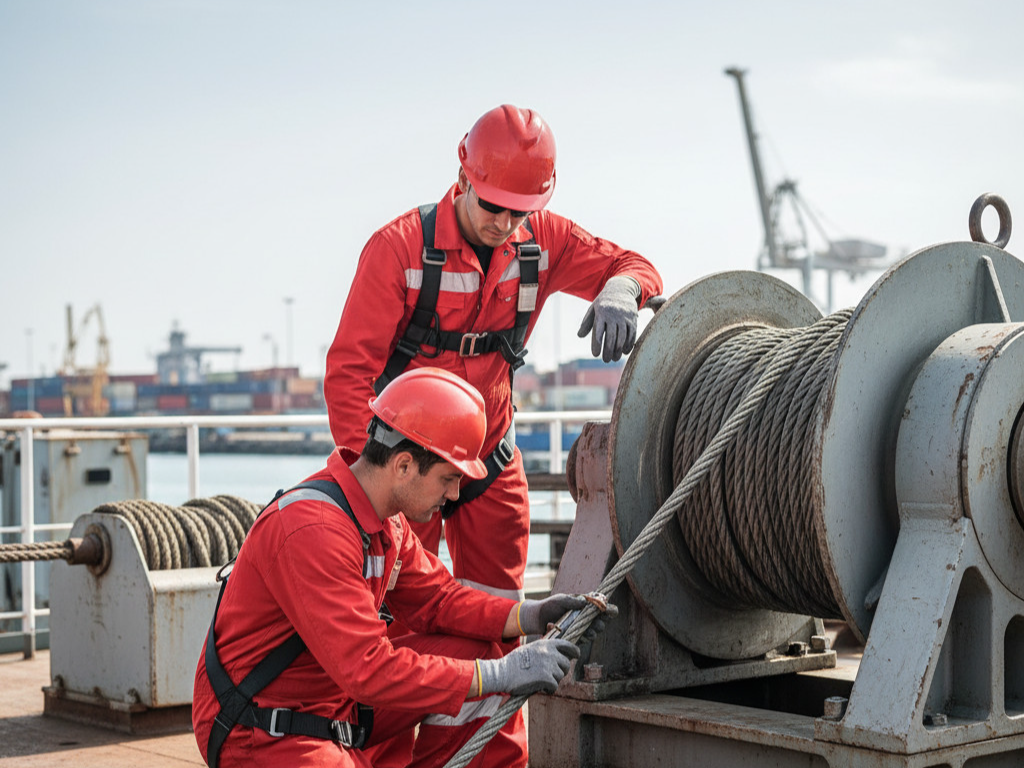
Ship Winch Essentials 2025: A Guide to Types and Critical Inspection Schedules
In the complex and demanding world of maritime operations, the ship winch stands as a cornerstone of deck machinery. These powerful devices are fundamental to nearly every critical task, from securing a vessel in port to managing heavy cargo. Consequently, a comprehensive understanding of the different types of winches and their rigorous inspection schedules is not just beneficial—it’s essential for the safety of the crew, the integrity of the vessel, and overall operational efficiency.
This guide provides a clear overview of the most common ship winches and outlines a practical inspection.
Core Types of Ship Winches Onboard a Vessel
1. Mooring Winches: critical for securing a ship to its berth at a port or terminal. They are used to handle mooring lines (ropes or wires) that hold the vessel in a fixed position, counteracting the forces of wind, current, and waves. These winches allow for precise tension control of the lines, which is crucial during tidal changes or loading operations.
2. Anchor Winches (Windlasses): more commonly known as a windlass, is a specialized machine designed for a single, vital purpose: handling the ship’s anchor. Located at the bow, the windlass pays out and heaves up the anchor chain.
3. Towing Winches: Found primarily on tugboats and offshore support vessels, towing winches are built for extreme power and durability. They are used to tow other vessels or large structures like oil rigs.
4. Cargo Winches: Essential for vessels that handle their own cargo, cargo winches are used in conjunction with derricks or cranes to lift goods in and out of the ship’s holds. Their operation requires precision, speed, and reliability to ensure a safe and efficient loading or unloading process.
The Vital Importance of a Rigorous Winch Inspection Schedule
A failing ship winch is a major safety hazard. A snapped mooring line or a slipping anchor brake can lead to catastrophic accidents, vessel damage, and serious injury. Therefore, a structured and consistent inspection schedule is non-negotiable and mandated by maritime regulations and classification societies. Here is a practical, easy-to-follow framework.
1. Daily Checks (Before Each Use): These are quick visual inspections that should be part of the crew’s standard pre-operation routine.
2. Weekly Inspections: This involves a slightly more detailed check of key components.
3. Monthly Maintenance: A more hands-on inspection to address developing issues.
4. Annual and 5-Yearly Overhauls: These major inspections are typically aligned with classification society surveys and should be documented thoroughly.
Certify Your Winch Performance
Ensure a seamless and successful inspection. Goutama Weight and Testing provides expert load tests, brake tests, and functional tests specifically designed to meet and exceed DNV and ABS standards. Don’t leave your certification to chance.
📧sales-indo@goutama.biz | sales-jakarta@goutama.biz
☎️0811-6932-011 | 0811-169-631
 English
  Indonesian