
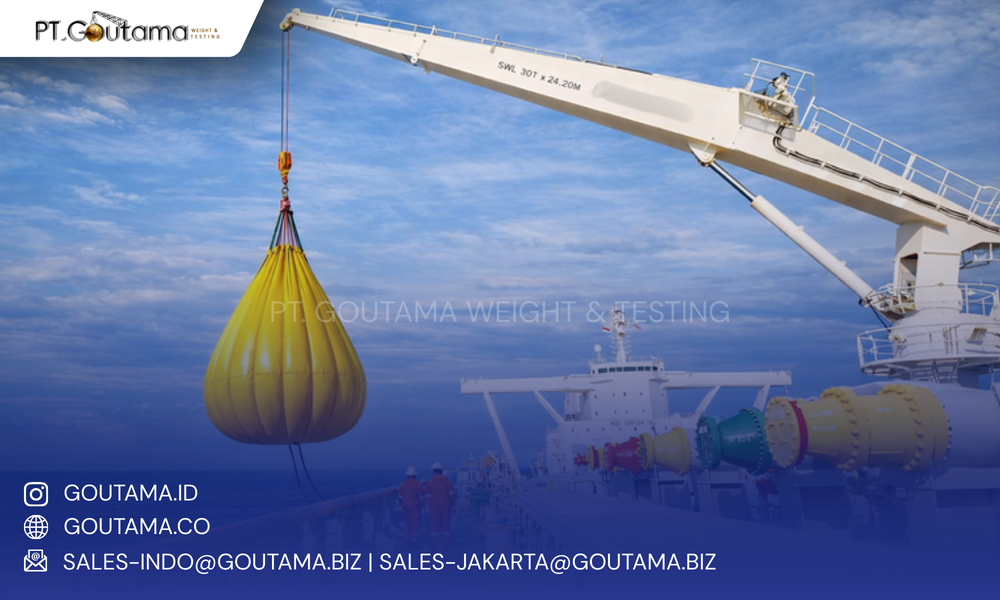
When and How Often Should Your Crane Be Load Tested? A Complete Guide to Load Testing
Cranes are vital lifting equipment in various industrial sectors such as construction, oil and gas, ports, and manufacturing. Because they are used to lift heavy loads, cranes pose a high risk if their safety is not ensured. One of the most important ways to ensure that cranes remain safe to use is through load testing.
What is Load Testing Crane?
Simply put, load testing is a test to verify the structural and functional capabilities of a crane by applying a load that exceeds its nominal lifting capacity (usually around 110% to 125%, depending on the standards used).
The main objective is not only to see if the crane “can lift,” but to ensure that the braking system, boom structure, wire rope, and safety sensors function perfectly under extreme pressure.
Why Do Cranes Need to Be Load Tested?
The risk of lifting equipment failure is fatal. Here are the reasons why this testing is crucial:
1. Ensuring Work Safety: Identifying hidden weaknesses in mechanical components before system failure occurs.
2. Regulatory Compliance: In Indonesia, regulations regarding Occupational Safety and Health for Lifting and Transporting Equipment require periodic testing to obtain a certificate of feasibility (SIA/SILO).
3. Extending Equipment Life: By knowing the actual condition of the material, you can perform preventive maintenance before damage becomes permanent and costly.
When Should a Crane Be Load Tested?
Determining the frequency of crane load testing depends heavily on the type of industry and the condition of the equipment. Based on industry safety standards, here is a guideline schedule:
1. Periodically
- Testing is conducted based on a periodic maintenance schedule after repairs or modifications to the equipment.
- Specifically for the Oil & Gas and Geothermal sectors, load testing must be conducted every 4-5 years.
2. Annually
- Performed once every 12 months.
- This schedule refers to local regulations and internal company safety standards to ensure consistent tool performance throughout each year of use.
3. Immediately
There are emergency situations where you cannot wait for the regular testing schedule, namely:
- Immediately after equipment damage occurs.
- After major repairs have been carried out.
- After replacement of major components in crane equipment.
Professional Load Testing Solutions
Goutama Weight & Testing is here as your trusted partner for your crane load testing needs. We provide professional testing services with high standards to ensure your equipment is always ready for work and complies with applicable regulations.
Contact Goutama Weight & Testing now for further consultation and to schedule your crane load testing!
📩sales-indo@goutama.biz | sales-jakarta@goutama.biz
📞0811-6932-011 | 0811-169-631
 English
  Indonesian