
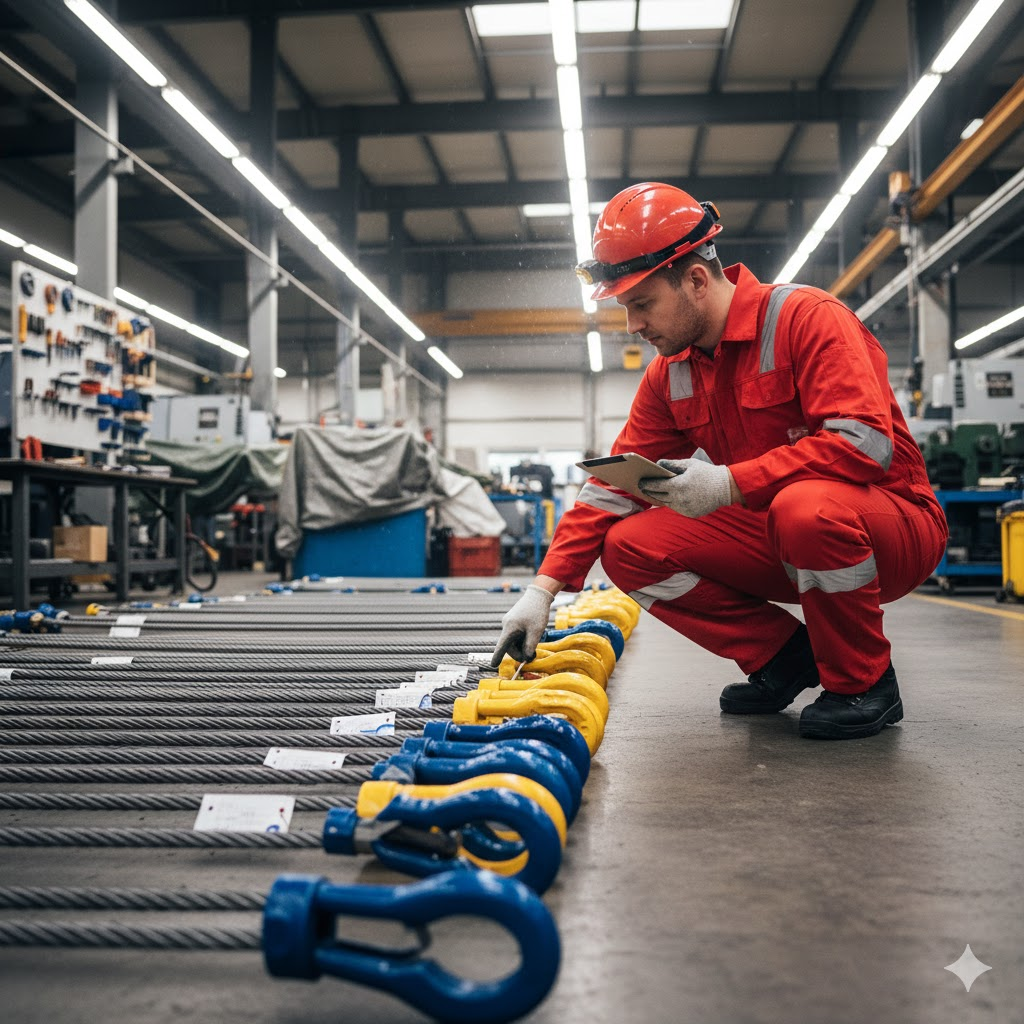
Understanding Lifting Gears and the Importance of Regular Non Destructive Inspection
From cranes and hoists to shackles, slings, and spreader beams, these components bear the weight of your operation. However, over time, repetitive stress, corrosion, or unnoticed fatigue can compromise their integrity, leading to potential equipment failure or accidents.
That’s where regular inspection and Non Destructive Testing (NDT) come into play. In this article, we’ll break down the types of lifting gears, why inspections are critical, and what testing methods are most effective in keeping your lifting equipment safe and compliant.
Common Types of Lifting Gears
Lifting gear refers to any equipment used to lift, lower, or move loads safely. Each type has its unique application, but all require the same level of care and inspection. Some of the most commonly used lifting gears include:
1. Shackles and Hooks: These are connection points between lifting slings, chains, or wire ropes. Over time, they can experience bending, cracking, or thread wear — especially under high-tension loads.
2.Wire Ropes and Slings: Wire ropes are essential for cranes and hoists. Continuous use under heavy loads can cause broken strands, kinks, or internal corrosion, which often go unnoticed without a detailed inspection.
3. Spreader Beams and Lifting Frames: These distribute loads evenly during lifting operations. A failure here could cause catastrophic accidents. Regular load testing ensures that the beam maintains its designed strength and stability.
4. Chain Blocks and Hoists: These mechanical lifting devices require both visual inspection and functional load testing to confirm that their braking and load mechanisms operate safely.
Inspection and Testing Methods for Lifting Gears
To ensure every lifting gear remains in peak condition, multiple testing and inspection techniques are used. Each serves a specific purpose and complements the others.
1. Visual Inspection: The first and simplest step in maintenance. Inspectors look for visible defects such as cracks, deformation, wear, or corrosion. Though basic, visual inspection is vital for catching surface issues early.
2. Load Testing: Load testing verifies whether lifting equipment can safely bear its rated capacity. By applying controlled loads, engineers can confirm that the gear performs safely under real working conditions. This method is essential after repairs, modifications, or before certification renewal.
3. Non-Destructive Testing (NDT): NDT uses scientific techniques to detect internal flaws without damaging the equipment. Common NDT methods for lifting gears include Magnetic Particle Inspection (MPI), Dye Penetrant Test (DPT), Ultrasonic Testing (UT)
Partner with a Certified Testing Provider
If your company needs load test, NDT, or MPI inspection for lifting gears, working with an accredited testing provider is essential.
👉 Goutama Weight & Testing offers certified load testing and non-destructive inspection services for a wide range of lifting equipment — ensuring safety, compliance, and reliability for your operations.
Contact our team today to schedule your lifting gear inspection and ensure your equipment meets the highest safety standards.
📩sales-indo@goutama.biz | sales-jakarta@goutama.biz
📞0811-6932-011 | 0811-169-631
 Indonesian
  English