Winch Testing on Ships: Ensuring Safety in the Marine Industry
Why Winch Testing Matters?
In marine operations, winches are indispensable for anchoring, mooring, and cargo handling. These systems work under constant pressure, heavy loads, and harsh sea environments. Over time, mechanical stress, corrosion, and fatigue can cause hidden defects that compromise performance and safety.
Without proper testing, failures can occur during critical maneuvers, leading to costly downtime, damaged equipment, or severe accidents. Regular winch testing reduces these risks by detecting problems early, ensuring compliance with maritime regulations, and extending the lifespan of equipment. For shipowners, it also demonstrates a strong commitment to crew safety and operational reliability.
What Winch Testing Involves?
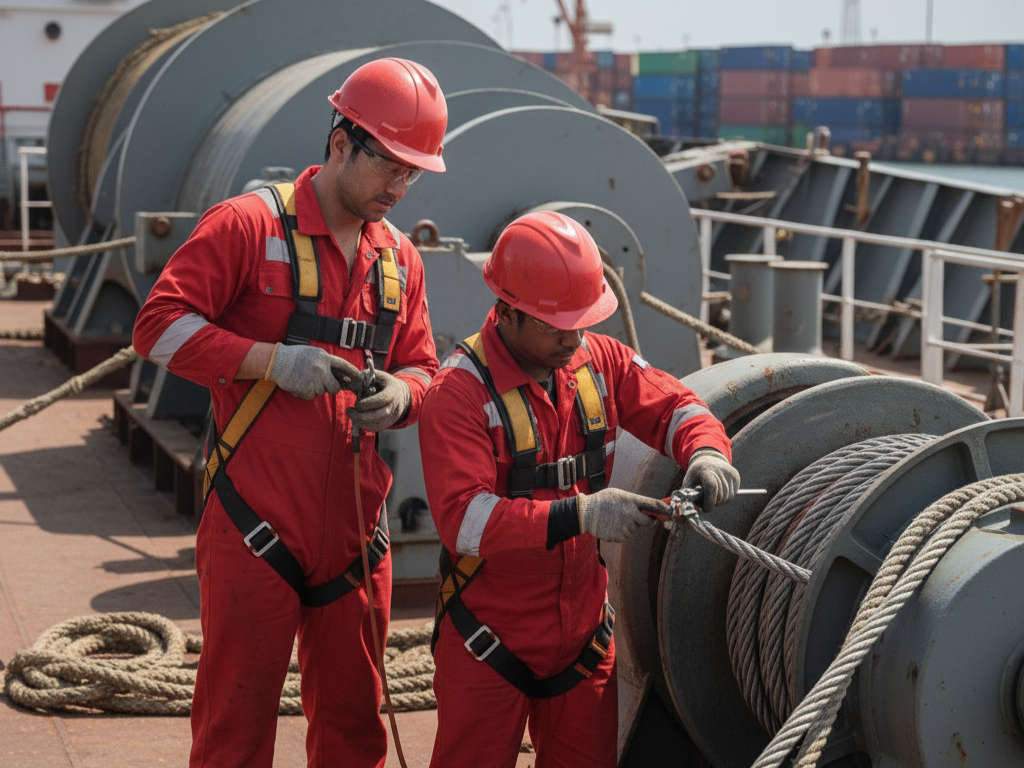
Winch testing is a structured process designed to evaluate the strength and performance of winch systems under realistic conditions. Inspections generally cover:
- Load capacity checks to confirm the winch can safely handle its rated weight.
- Brake system testing to ensure effective stopping power during operations.
- Visual and mechanical inspection of gears, drums, and wires for signs of wear or corrosion.
- Control system verification to check responsiveness and safety mechanisms.
By combining load simulations with detailed inspections, the process ensures the winch operates reliably at sea. This approach not only validates equipment performance but also gives crews confidence that the system will function correctly when it matters most.
How Winch Testing is Conducted
The process of conducting winch testing typically follows a clear sequence:
- Preparation – Cleaning and inspecting the winch before applying test loads.
- Applying Load – Using calibrated weights or hydraulic tools to simulate real operations.
- Monitoring Performance – Observing lifting, holding, and releasing functions under stress.
- Brake and Safety Checks – Confirming emergency stop and holding systems work effectively.
- Evaluation & Certification – Recording results and issuing compliance reports if the winch meets standards.
This systematic method ensures that the equipment is not only operational but also certified to meet international safety requirements. For the marine industry, that means reduced downtime, improved reliability, and safer working conditions at sea.
Kesimpulan
Ship safety and efficiency rely heavily on well-maintained equipment, and winches are no exception. Through consistent winch testing, operators can identify issues early, comply with regulations, and extend the life of their systems.
If your company is looking for a professional certified partner to perform winch testing, choose PT Goutama Weight & Testing —a reliable provider dedicated to ensuring marine equipment safety and performance.
📩 sales-indo@goutama.biz | sales-jakarta@goutama.biz
📞0811-6932-011 | 0811-169-631
 Indonesian
  English